O Holy Night Sheet Music PDF: A Comprehensive Guide
Discover a wealth of readily available O Holy Night sheet music in PDF format, catering to diverse musical needs and skill levels.
This guide explores resources like Musescore and IMSLP, offering free downloads for piano, guitar, and vocal arrangements.
What is “O Holy Night”?
“O Holy Night” (French: Cantique de Noël) is a beloved Christmas carol, celebrated for its powerful melody and profoundly spiritual lyrics. Originally titled “Cantique de Noël,” it was composed by Adolphe Adam in 1847, with French lyrics penned by Placide Cappeau. The carol vividly depicts the birth of Jesus Christ, emphasizing themes of redemption and hope.
Its English translation, crafted by John Sullivan Dwight in 1855, further cemented its place in the Christmas canon. The song’s dramatic vocal range and soaring melodies make it a favorite among singers, often considered a challenging yet rewarding piece to perform.
Today, “O Holy Night” transcends cultural boundaries, becoming a staple during Christmas celebrations worldwide. The availability of sheet music PDFs has democratized access to this classic carol, allowing musicians of all levels to learn and share its beauty. It remains a powerful expression of faith and joy during the holiday season, inspiring countless performances annually.
The History of the Hymn
“O Holy Night’s” journey began in 1847, when French poet Placide Cappeau, at the request of a local wine merchant, penned lyrics for a Christmas hymn. Shortly after, composer Adolphe Adam set these words to music, creating the original Cantique de Noël. Initially, the carol faced resistance from some church authorities who questioned its poetic style.
However, its popularity quickly grew, particularly after John Sullivan Dwight, an American Unitarian minister, translated it into English in 1855. Dwight’s translation helped spread the hymn’s message across the Atlantic. During the Civil War, the song briefly fell out of favor, but experienced a resurgence in the 20th century.
The widespread availability of sheet music PDFs in recent years has further fueled its enduring appeal. Today, “O Holy Night” stands as a testament to the power of collaborative artistry and a timeless expression of Christmas spirit, readily accessible to musicians globally.
Adolphe Adam: The Composer
Adolphe Adam (1803-1856) was a French composer known for his lyrical operas and charming melodies. While he created numerous works, including ballets like Giselle and operas such as Le Toréador, he is overwhelmingly remembered today for composing the music to “O Holy Night.” Adam’s musical style was characterized by its elegance and accessibility, making his compositions widely popular during his lifetime.
He skillfully set Placide Cappeau’s evocative poetry to music, crafting a melody that perfectly captures the hymn’s emotional depth. The enduring appeal of “O Holy Night” is a direct result of Adam’s compositional talent. The availability of sheet music PDFs allows musicians to explore the intricacies of his work.
Adam’s legacy extends beyond this single carol, but “O Holy Night” remains his most celebrated achievement, continuing to inspire and uplift audiences worldwide through countless performances and readily available arrangements.
Original Key and Vocal Range
“O Holy Night” was originally composed in the key of D-flat major. However, due to its challenging vocal demands, it’s frequently transposed to keys like D major or C major to better suit different vocal ranges. The original key presents a significant test for singers, requiring considerable breath control and vocal agility.
The hymn boasts a wide vocal range, typically spanning from a low A♭₂ to a high F₅. This expansive range makes it particularly suitable for dramatic sopranos and tenors with strong high notes. Sheet music PDFs often include transposed versions to accommodate various voice types.
Understanding the original key and range is crucial for performers aiming for an authentic interpretation. Many arrangements available online, including those in PDF format, offer simplified versions or adaptations for less experienced singers, ensuring wider accessibility.
Finding Free “O Holy Night” Sheet Music PDFs
Locate numerous free “O Holy Night” sheet music PDFs through online platforms like Musescore and the IMSLP. These resources provide easy access for musicians.
Musescore.com: A Primary Source
Musescore.com stands as a leading online destination for musicians seeking free sheet music, and it’s particularly rich in arrangements of “O Holy Night.” The platform boasts a vast community of composers, performers, and music educators who contribute and share their creations. You’ll find a diverse range of arrangements, from simple piano accompaniments to complex choral scores, all available for download in PDF format.
Sharing and accessibility are core tenets of Musescore. Users can easily upload, download, and print sheet music, fostering a collaborative environment. The site’s search functionality allows you to quickly filter results by instrument – piano, guitar, flute, and more – ensuring you find the arrangement best suited to your needs.
Notably, Musescore features transcriptions like the “O Holy Night ー Home Free” arrangement for tenor, bass, and baritone voices (mens choir), showcasing the platform’s capacity for specialized and contemporary arrangements. Regularly updated with new submissions, Musescore.com remains a dynamic and reliable source for “O Holy Night” sheet music, catering to both beginners and experienced musicians alike. The date of the Home Free arrangement is 2024-05-14T13:23:19.
IMSLP (Petrucci Music Library)
IMSLP, also known as the Petrucci Music Library, is a treasure trove of public domain sheet music, offering a valuable resource for finding “O Holy Night” scores. Unlike some platforms focused on contemporary arrangements, IMSLP specializes in historically significant compositions, providing access to original editions and early arrangements of the hymn.
Its strength lies in its dedication to providing legally free scores, primarily those whose copyrights have expired. This means you can confidently download and use the music without concerns about licensing restrictions. While the selection might not be as extensive as Musescore in terms of modern interpretations, IMSLP offers a unique opportunity to study the hymn’s original form and evolution.
Navigating IMSLP requires a slightly different approach, as the library is organized by composer and work. Searching for “Adolphe Adam” will lead you to various editions of “O Holy Night,” allowing you to explore different arrangements and historical versions. The platform is a crucial resource for musicians interested in the authentic performance practice of this beloved carol, offering a glimpse into its musical heritage;
Other Websites Offering Free PDFs
Beyond Musescore and IMSLP, several other websites provide free “O Holy Night” sheet music PDFs, though caution and verification are advised. Many sites aggregate scores from various sources, so copyright status and accuracy can vary. Websites like 8notes.com and Free-scores.com often feature user-submitted arrangements, offering a diverse range of options.
However, it’s crucial to carefully review the terms of use and ensure the download is legally permissible. Some sites may require registration or contain advertisements. Always scan downloaded files with antivirus software to protect your device. A quick search on Google or your preferred search engine using keywords like “O Holy Night sheet music free PDF” will reveal numerous possibilities.
Remember to prioritize reputable sources and cross-reference arrangements when possible. Checking multiple versions can help identify errors or inconsistencies. While these alternative platforms expand your options, Musescore and IMSLP generally offer the most reliable and legally sound access to “O Holy Night” sheet music in PDF format.
Sheet Music Arrangements for Different Instruments
Explore diverse instrumental arrangements of “O Holy Night” in PDF format, including options for piano, guitar, flute, and other wind instruments.
Find sheet music tailored to your preferred instrument and skill level.
Piano Arrangements
Piano arrangements of “O Holy Night” are exceptionally popular, ranging from beginner-friendly simplified versions to complex, virtuosic performances. Many websites, notably Musescore.com, host a vast collection of free PDF sheet music for various piano skill levels.
You’ll discover arrangements that focus on the melody with basic accompaniment, ideal for those new to the piece, alongside more elaborate arrangements featuring intricate harmonies and embellishments. Michael Kravchuk offers a notable piano arrangement available online, showcasing a beautiful interpretation of the hymn.
These arrangements often include detailed fingerings and dynamic markings to aid performance. Whether you’re seeking a solo piano piece for a festive occasion or a challenging arrangement to expand your repertoire, the availability of free PDF sheet music makes “O Holy Night” accessible to pianists of all abilities. Explore different arrangements to find one that suits your style and technical proficiency.
Guitar Arrangements
Guitarists seeking to play “O Holy Night” will find a diverse selection of sheet music PDFs available online, particularly on platforms like Musescore.com. Arrangements cater to various skill levels, from beginner-friendly chord charts to more advanced fingerstyle transcriptions.
Many arrangements focus on providing a solid harmonic foundation for vocal accompaniment, utilizing common chords and strumming patterns. More experienced guitarists can explore arrangements featuring intricate arpeggios, melodic embellishments, and even solo guitar adaptations of the hymn.
These PDFs often include tablature alongside standard notation, making them accessible to guitarists who are more comfortable reading tablature. The availability of free sheet music allows guitarists to easily access and learn this beloved Christmas carol, adding a beautiful touch to festive gatherings or personal practice sessions. Explore the options to find an arrangement that matches your playing style and technical abilities.
Vocal Arrangements (Soprano, Alto, Tenor, Bass)
Vocalists of all ranges can find suitable “O Holy Night” sheet music PDFs online. Musescore.com is a primary source, offering arrangements specifically tailored for Soprano, Alto, Tenor, and Bass voices. These arrangements typically present the melody line with piano accompaniment, allowing singers to practice and perform the hymn effectively.
Soprano arrangements often feature the highest vocal range, showcasing the song’s soaring melodies. Alto parts provide a harmonious lower counterpoint, while Tenor and Bass arrangements offer rich harmonic support. Many PDFs include lyrics alongside the notation, aiding in memorization and performance.
Finding sheet music designated for your specific vocal part ensures a comfortable and accurate rendition of this classic carol. The availability of these resources empowers singers to participate in solo performances, duets, or choral ensembles, enriching the festive season with beautiful vocal music.
Flute and Other Wind Instrument Arrangements
Expanding beyond traditional vocal and piano formats, “O Holy Night” sheet music PDFs are readily available for flute and a variety of other wind instruments. Musescore.com serves as a valuable repository, hosting arrangements adapted for instruments like clarinet, saxophone, and oboe, alongside dedicated flute scores.
These arrangements typically transpose the vocal melody to suit the instrument’s range and timbre, often including a piano accompaniment for harmonic support. Flute arrangements frequently emphasize the lyrical qualities of the melody, while other wind instruments can offer unique tonal colors.
Access to these PDFs allows wind instrumentalists to participate in festive performances, adding a distinctive layer to the carol’s traditional sound. Whether for solo performances or ensemble playing, these arrangements provide a rewarding musical experience, broadening the accessibility of “O Holy Night” to a wider range of musicians.
Sheet Music for Different Vocal Ensembles
Explore diverse vocal arrangements of “O Holy Night” in PDF format, designed for soloists, duets, choirs (SATB, SSA, TTBB), and even unique ensembles like Home Free.
Solo Vocal Sheet Music
For vocalists seeking to perform “O Holy Night” independently, a plethora of solo sheet music options are readily available in PDF format. These arrangements typically include the melody line with piano accompaniment, catering to various vocal ranges and skill levels. Musescore.com, a prominent online platform, hosts numerous free solo vocal scores, often offering different keys to suit individual preferences.
When selecting solo sheet music, consider the key signature and whether it comfortably aligns with your vocal range. Some arrangements may include phrasing suggestions or dynamic markings to aid interpretation. Beginners might benefit from simplified arrangements, while experienced singers can explore more elaborate versions with ornamentation and challenging vocal runs.
Furthermore, searching for “O Holy Night solo vocal PDF” will yield results from various websites, including IMSLP (Petrucci Music Library), which provides public domain sheet music. Always preview the score before downloading to ensure it meets your needs and accurately reflects the desired arrangement. Many options are available for Soprano, Alto, Tenor, and Bass voices.
Duet Arrangements
Duet arrangements of “O Holy Night” offer a beautiful and harmonious way to experience this classic hymn. These sheet music PDFs typically feature two vocal lines, often designed for contrasting voice types – such as soprano and alto, or tenor and bass – creating a rich texture. Finding these arrangements requires a focused search, but resources like Musescore.com frequently host user-submitted duet scores;
When exploring duet options, pay attention to the vocal ranges specified to ensure compatibility with the singers’ abilities. Some arrangements may include a shared piano accompaniment, while others might feature independent parts. The complexity can vary significantly, from simplified versions suitable for beginners to more intricate arrangements demanding greater vocal control.
Searching specifically for “O Holy Night duet PDF” will uncover a range of possibilities. Previewing the score is crucial to assess the harmony, vocal demands, and overall arrangement style before committing to a download. These duets provide a rewarding experience for singers looking to collaborate and share the beauty of this beloved carol.
Choir Arrangements (SATB, SSA, TTBB)
For choral ensembles, “O Holy Night” sheet music is widely available in standard voicings: SATB (Soprano, Alto, Tenor, Bass), SSA (Soprano, Soprano, Alto), and TTBB (Tenor, Tenor, Bass, Bass). These arrangements are designed to showcase the full harmonic potential of a choir, offering rich textures and dynamic possibilities. Musescore.com and the IMSLP (Petrucci Music Library) are excellent starting points for locating these PDFs.
SATB arrangements are the most common, providing a balanced sound with all voice parts represented. SSA and TTBB voicings cater to specific ensemble compositions, often found in all-women or all-men choirs. When selecting a choral arrangement, consider the skill level of your singers and the desired complexity of the piece.
Many arrangements include piano accompaniment, while others may be a cappella. Carefully review the score to understand the vocal ranges, harmonies, and any challenging passages. Searching for “O Holy Night SATB PDF,” “O Holy Night SSA PDF,” or “O Holy Night TTBB PDF” will refine your search and yield relevant results.
Home Free Arrangement (Tenor, Bass, Baritone)
The a cappella group Home Free is renowned for its stunning vocal arrangements, and their rendition of “O Holy Night” is particularly popular. Sheet music specifically transcribed for the Home Free arrangement – featuring Tenor, Bass, and Baritone vocal parts – is available online, primarily through MuseScore.com. This arrangement showcases intricate harmonies and vocal percussion, replicating the group’s signature sound.
These transcriptions often require a high level of vocal skill, as they demand precise intonation and rhythmic accuracy. The arrangement is designed for a mens choir or a vocal group with a similar configuration. Dan Satter is a notable arranger who has created a popular version available on MuseScore.
When searching, use keywords like “O Holy Night Home Free sheet music PDF” or “O Holy Night Tenor Bass Baritone arrangement.” Be sure to preview the score to assess its difficulty and ensure it suits your ensemble’s capabilities. The arrangement’s complexity makes it a rewarding challenge for advanced vocal groups.
Understanding Sheet Music Notation
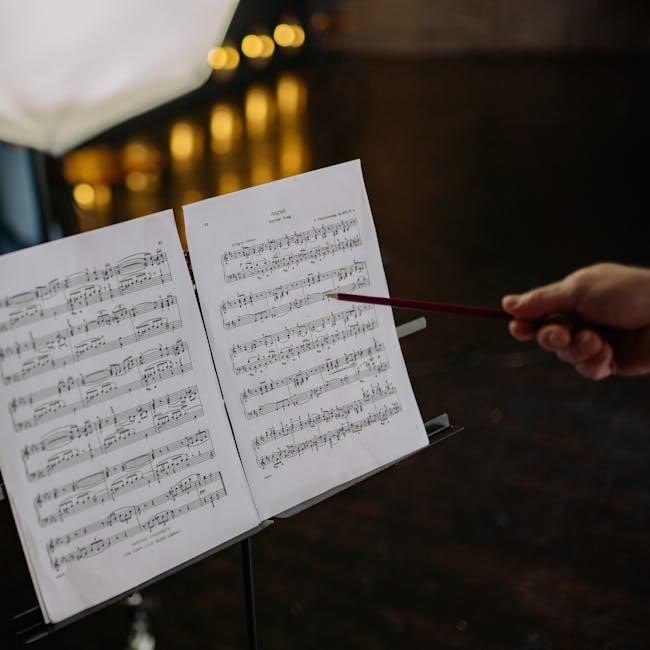
Decoding musical symbols is crucial for playing “O Holy Night” from sheet music. Key and time signatures, vocal notation, and dynamic markings all contribute to a successful performance.
Key Signatures and Time Signatures
Understanding key signatures is fundamental when interpreting “O Holy Night” sheet music. The hymn is commonly found in several keys, including D-flat major and G major, each influencing the overall tonal color and vocal demands. The key signature dictates which notes are consistently sharp or flat throughout the piece, impacting fingerings for instrumentalists and vocal pitch for singers.
Time signatures, typically 4/4, define the rhythmic structure. This indicates four beats per measure, with a quarter note receiving one beat. Recognizing the time signature ensures accurate rhythm and phrasing. Variations might exist in arrangements, but 4/4 remains prevalent. Careful attention to these elements allows musicians to accurately reproduce the intended musical expression of Adolphe Adam’s composition.
Furthermore, observing accidentals – sharps, flats, or naturals not included in the key signature – is vital for precise performance. These alter specific notes within a measure, adding nuance and complexity to the melody and harmony. Mastering these foundational elements unlocks a deeper comprehension of the sheet music.
Reading Vocal Notation
Decoding vocal notation in “O Holy Night” sheet music requires understanding several key elements. The staff displays pitch, with higher notes positioned higher on the lines and spaces. Note values – whole, half, quarter, eighth – indicate duration. Rests signify silence, mirroring note values. Lyrics are placed below the notes, aligning with their corresponding syllables.
Pay close attention to slurs and ties. Slurs connect notes, indicating a legato phrasing, while ties join notes of the same pitch, extending their duration. Vocal sheet music often includes dynamics (p for piano, f for forte) and articulation markings (staccato, tenuto) to guide expressive performance.
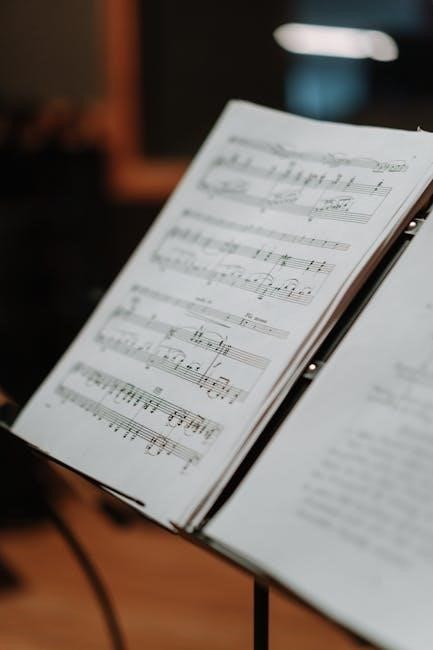
Additionally, observe any accidentals (sharps, flats, naturals) altering pitch. Understanding these symbols is crucial for accurate intonation. For more complex arrangements, fermatas may indicate sustained notes. Familiarity with these conventions unlocks the beauty and emotional depth of this beloved hymn, allowing for a nuanced and expressive vocal rendition.
Piano Accompaniment Notation
Piano accompaniment in “O Holy Night” sheet music typically features a grand staff – treble clef for the right hand and bass clef for the left. The right hand often carries melodic fragments or harmonic support, while the left hand provides the foundational chords and rhythmic drive.
Chord symbols above the staff indicate the harmonies to be played, allowing for improvisation or simplified accompaniment. Pay attention to pedal markings, indicated by “Ped.” and asterisks (*), guiding sustain and resonance. Rhythmic notation is crucial; understand time signatures and note values to maintain accurate timing.
Dynamics (p, f, crescendo, diminuendo) and articulation markings (staccato, legato) shape the musical expression. Observe any octave markings or ledger lines extending beyond the staff. Skilled pianists will interpret these elements to create a rich and supportive harmonic backdrop for the vocal performance, enhancing the hymn’s emotional impact.
Dynamic Markings and Articulation
Dynamic markings in “O Holy Night” sheet music are essential for conveying the hymn’s emotional depth. Common markings include p (piano – soft), f (forte – loud), mf (mezzo forte – moderately loud), and mp (mezzo piano – moderately soft). Crescendo (<) indicates a gradual increase in volume, while diminuendo (>) signifies a decrease.
Articulation markings shape how individual notes are performed. Staccato (•) denotes short, detached notes, creating a crisp effect. Legato (—) indicates smooth, connected notes, fostering a flowing melody. Accents (>) emphasize specific notes, adding dramatic weight.
Phrasing is also indicated through slurs (curved lines connecting notes), guiding the musical line. Careful attention to these markings, combined with a sensitive interpretation, will bring the hymn’s expressive qualities to life, enhancing its powerful and reverent character for both vocalists and instrumentalists.